
Tornitura
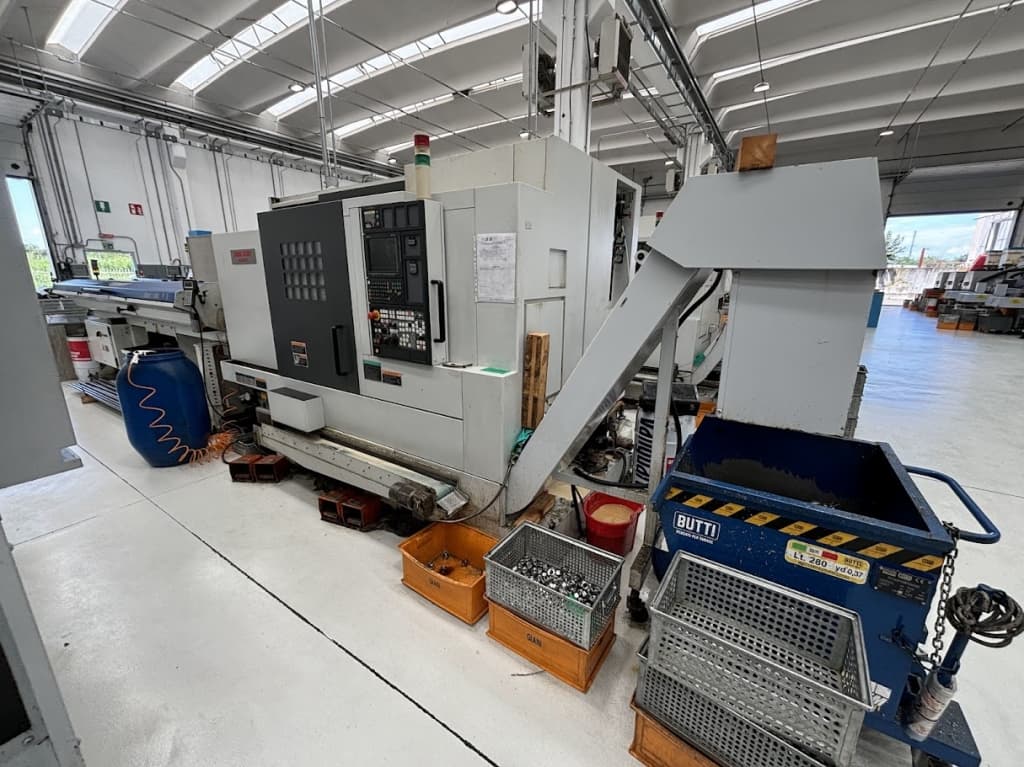
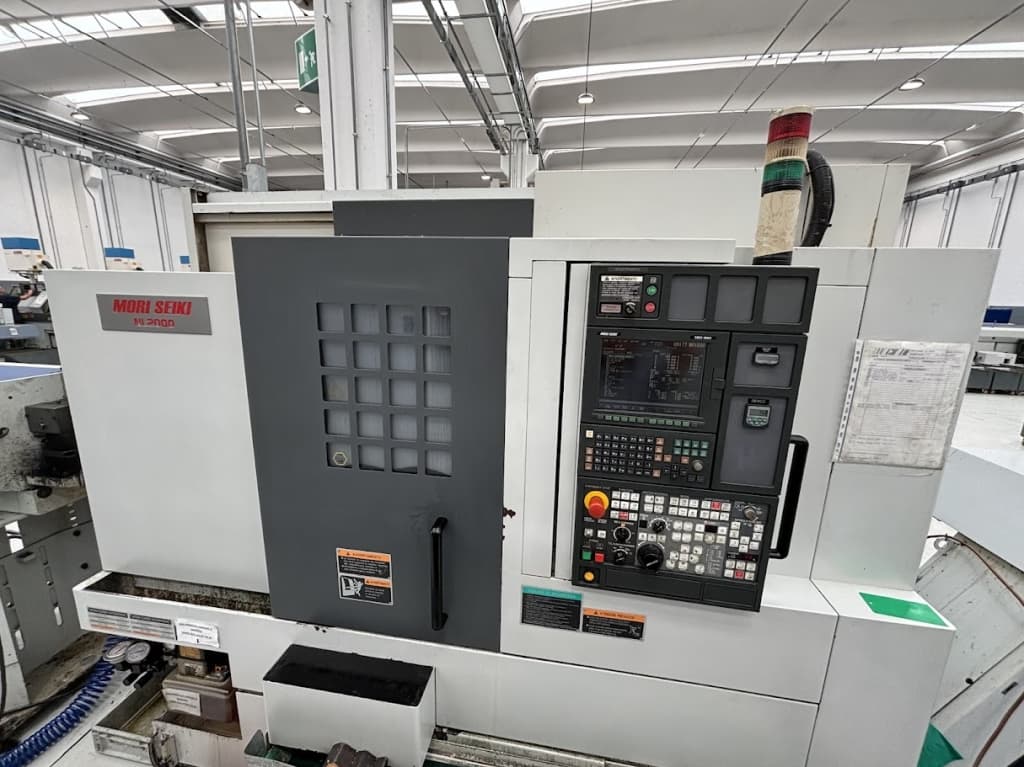
Mori Seiki NL series CNC lathe: models, BMT turret and technical specs
· Industrialbuyer S.r.l.
The Mori Seiki NL series is a line of fixed-headstock CNC turning centres built by the Japanese maker Mori Seiki between the mid-2000s and the early part of the following decade. Four sizes — NL1500, NL2000, NL2500, NL3000 — cover everything from small bar work to heavy chucking parts. It was built to work hard and last, and it is still one of the most sought-after used lathes today.
What sets an NL apart (on the shop floor, not on the brochure)
- BMT turret (Built-in Motor Turret). The live-tool motor sits inside the turret, not driven by belts and couplings. In practice it handles heavy milling and drilling that a conventional VDI turret won't, with less vibration and more torque.
- Direct Drive Spindle (DDS). Motor coupled straight to the spindle: less backlash, less heat, cleaner finishes and accurate threads.
- Digital tailstock. Position and thrust are set from the control, repeatable, with no manual adjustment at every part change.
- MAPPS control (Fanuc-based). A handy Mori interface, but underneath it's a Fanuc — spare parts and service are easy to find.
Models and suffixes (how to read an NL)
| Model | Chuck | Bar capacity | In short |
|---|---|---|---|
| NL1500 | 6" | 34 mm | the most compact |
| NL2000 | 8" | 65 mm | the most common |
| NL2500 | 10" | 80 mm (bore ~Ø91) | for larger, heavier parts |
| NL3000 | 12" | 90 mm | the largest in the range |
The letters after the number:
- MC = live tooling (mill and drill off-axis, not just turn)
- Y = Y axis (the turret also moves vertically: off-centre holes and milling)
- S = sub-spindle (the part transfers to the second spindle and is finished from the other end, automatically)
- SY = Y axis + sub-spindle, the most complete version
- the number after the slash (e.g. /500, /700, /1250) = turning length in mm
For example, an NL2500 SY/700 is a 10" size with live tooling, Y axis, sub-spindle and 700 mm between centres.
Notes from the used market — what to look at on a Mori Seiki NL
When I assess a used one I look at three things first: the condition, the performance — machining accuracy included — and the configuration (live tooling, Y axis, sub-spindle: how complete it is).
There are no "typical" faults on these machines: the only thing to check is the normal wear of consumable parts. It's a Mori Seiki — a name of absolute prestige, robust build, massive structure. Reliable Japanese machines, built to last for years. And it's exactly this very high build quality that keeps their value high over time.
Something I see often: many machine shops actually prefer this series to the newer one, precisely for the structure, which they judge far more robust. After all, when it was new the NL was among the most expensive lathes around.
Who it's for and typical work
Subcontractors and precision shops making turned-milled parts in batches: shafts, fittings, valve bodies, hydraulic components, heavy small parts. With sub-spindle and Y axis the part comes off complete from a single machine, with no second setup.
Frequently asked questions
What's the difference between Mori Seiki NL and NLX?+
The NLX is the next generation, with an updated structure and control. The NL is still a very solid machine and more affordable on the used market.
What does NL2500 SY mean?+
It's a 10" Mori Seiki lathe with Y axis and sub-spindle.
What does the BMT turret change compared to a VDI?+
The tool motor is built into the turret: more torque and rigidity in milling, less vibration.
Can the MAPPS control be serviced?+
Yes: it's the Mori interface on a Fanuc base, so spare parts and service are available.
How many axes does a Mori Seiki NL have?+
From 2 axes in the base version up to Y axis plus sub-spindle in the SY versions.